

For Individuals & Caregivers
Hospice
Hospice provides end-of-life comfort care for those with a terminal prognosis of 6 months or less.
To enroll in hospice you must decline treatment or choose to stop life prolonging medications and interventions; this may include stopping heart medications, discontinuing chemo or radiation, ending kidney dialysis or deactivating a defibrillator.
Hospice care is generally provided in your home; which can be a private residence, nursing home, assisted living facility or residential care facility.
Talk with your doctor about starting hospice care:
Hospice referrals can be initiated by your primary care physician, specialist, or hospitalist. However, if you have a 6 month or less terminal prognosis, a referral from a medical professional is not necessary, you can enrolled on your own accord.
EOLCOR can provide a list of hospice providers who support the Death with Dignity Act and Voluntarily Stopping Eating and Drinking in your region. Contact our team for information.
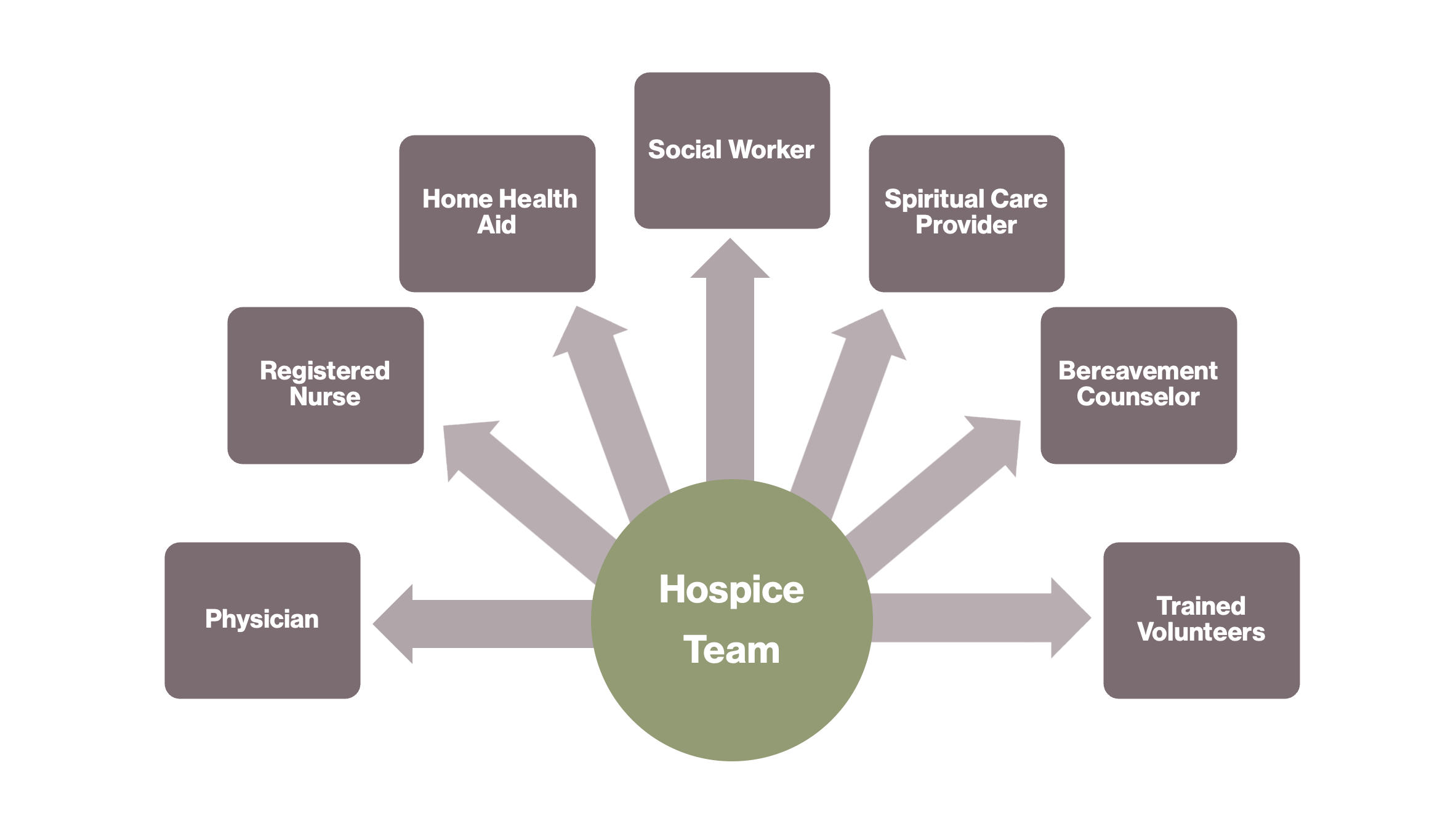
Hospice Services
Provides medical equipment, medications and medication adjustments to avoid side effects.
Hospice social workers can assist with legal paperwork and coordinating social services.
Assists patients and caregivers with emotional, psychosocial, and spiritual support.
Provides pain and other symptom management.
Instructs informal caregivers on how to care for patients.
Nondenominational chaplains provide spiritual guidance, grief support, and counseling to patients as well as bereaving caregivers for up to 13 months after death.
May have short-term inpatient care available when pain or symptoms become unmanageable at home or caregivers need respite care.
Provides 24 hour on-call support.
Is Hospice Covered by Insurance?
Hospice services are covered by Medicare, Oregon Health Plan, Veterans Administration, and other public and private health insurance providers. Hospice is not limited to six months; if medically indicated, additional benefit periods can be added with a reevaluation from the hospice team.
When Medicare beneficiaries choose hospice, the right to standard Medicare treatments for terminal illness management is discontinued. However, beneficiaries can use Medicare benefits for the management of illnesses unrelated to the terminal illness.
Patients may elect to end hospice care at any time and must do so if they want to start life-prolonging treatments.